
Ten Days Around the Moon
Follow the chronological flight profile of Artemis II. From the raw power of launch to the high-stakes free-return trajectory, see how four astronauts will test Orion's critical systems in deep space.
The Physics of the Flyby
10 Days
mission duration
4,600 mi
above lunar far side
24,500 mph
re-entry velocity
Four Phases of Flight
Ascent & Orbit Checkout
Trans-Lunar Injection
The Free-Return Flyby
Atmospheric Entry
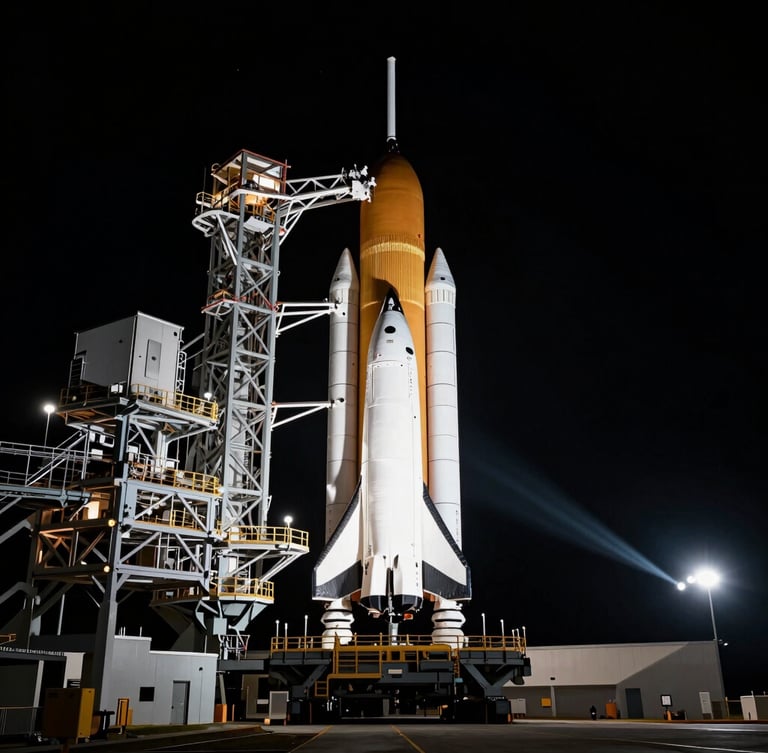
The Space Launch System lifts Orion into high Earth orbit. The crew performs critical checkouts of the life-support systems before committing to deep space.
The interim cryogenic propulsion stage fires, accelerating Orion to over 22,000 mph to break free of Earth's gravity and head for the Moon.
Orion swings behind the lunar far side, utilizing gravity to naturally pull the spacecraft back toward Earth without firing its main engines.
Orion hits the atmosphere at 24,500 mph. The advanced heat shield protects the crew before a high-precision Pacific ocean splashdown.
Paving the Way for Artemis III
Artemis II is the ultimate proving ground. Every system tested on this flight validates the life-support, navigation, and recovery protocols required for the next crewed landing.